Post-Procedure Barrier Repair Matrix: Physiological Lipid Ratios & Clinical Skin Cycling
In-office aesthetic procedures—from medium-depth trichloroacetic acid (TCA) chemical peels to ablative fractional CO₂ lasers and radiofrequency microneedling—generate controlled thermal or chemical micro-trauma to awaken fibroblast neocollagenesis. However, clinical success hinges entirely on the post-procedure rehabilitative phase. If the stratum corneum's intercellular lipid matrix is not reconstructed with precise stoichiometric ratios of ceramides, cholesterol, and free fatty acids, patients risk prolonged erythema, subclinical chronic inflammation, and catastrophic post-inflammatory hyperpigmentation. Discover the biophysics of lipid replenishment and how to transition successfully into structured skin cycling.
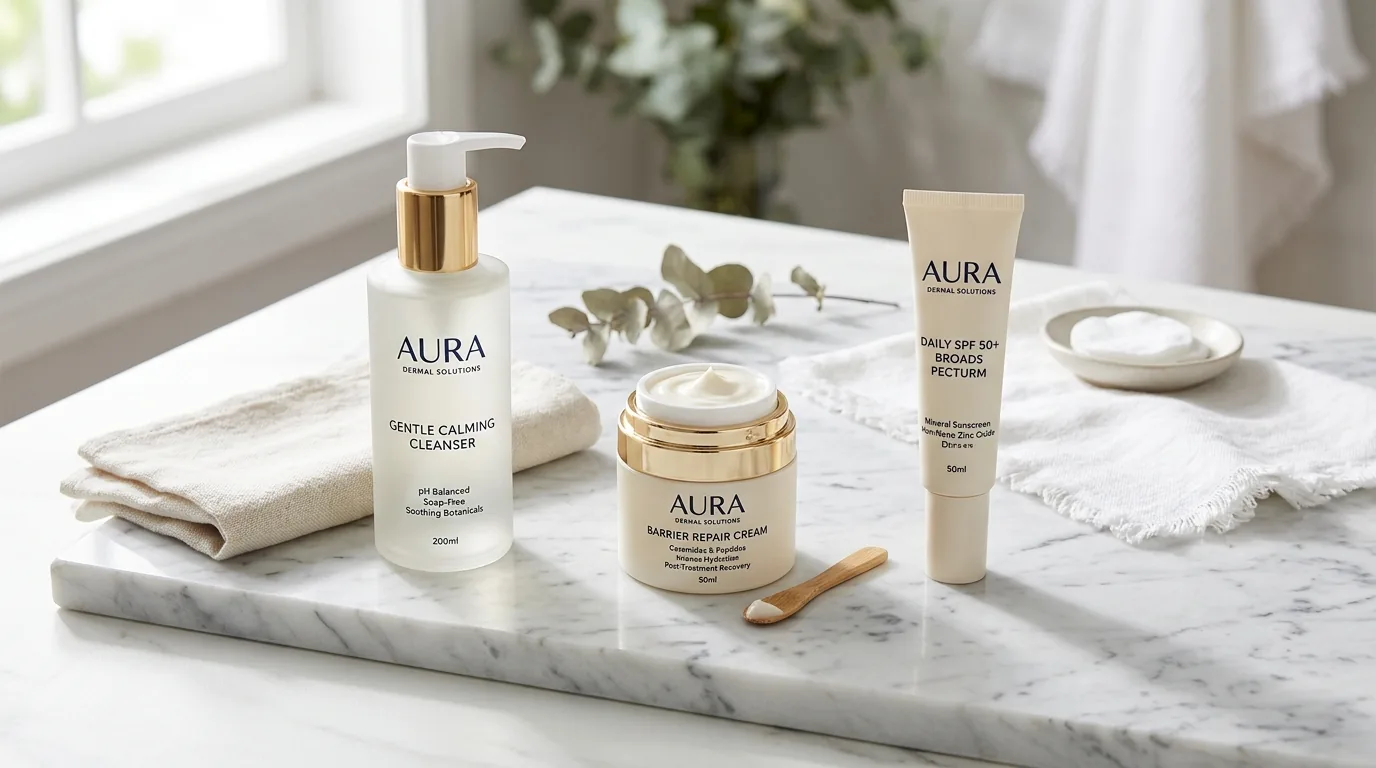
1. Stratum Corneum Biochemistry: The "Brick and Mortar" Architecture
The stratum corneum operates as the body's primary biosensor and physical interface with the environment. Under Dr. Peter Elias's classic paradigm, terminal anucleated keratinocytes (corneocytes) serve as structural "bricks," surrounded by a continuous extracellular "mortar" consisting of multi-lamellar lipid sheets.
Unlike ordinary sebum (which is rich in triglycerides, squalene, and wax esters), the extracellular permeability barrier is synthesized within lamellar bodies of the stratum granulosum and exocytosed as a precise physiological triad:
Sphingoid bases linked to fatty acid chains. Long-chain omega-hydroxy ceramides (such as Ceramide EOS / Ceramide 1) rivet neighboring lipid lamellae into continuous, impenetrable sheets.
The essential membrane fluidizer. Cholesterol modulates lipid packing density, preventing the crystalline gel phases of ceramides from becoming excessively brittle or structurally rigid.
Predominantly saturated long-chain palmitic, stearic, and linoleic acids. They ionize to maintain the skin’s acidic mantle (pH 4.5–5.5), regulating antimicrobial defenses and desquamation enzymes.
The 3:1:1 Molar Ratio: Why Single Actives Fail
A seminal discovery in lipid biochemistry (Man et al., Journal of Clinical Investigation) demonstrated that following acute barrier disruption, applying any single lipid alone (ceramides alone, or cholesterol alone) or an incomplete two-component mixture actually retards barrier recovery. Incomplete lipid fractions enter keratinocytes and provoke discordant intracellular lipid processing, arresting lamellar body extrusion.
Optimal trans-epidermal barrier recovery requires an equimolar or ceramide-dominant formulation—specifically a 3:1:1 molar ratio of Ceramides to Cholesterol to Free Fatty Acids. This exact stoichiometry rapidly integrates into damaged intercellular spaces, suppressing transepidermal water loss (TEWL) up to 3.4 times faster than petroleum jelly or standard dimethicone lotions.
2. Acute Barrier Trauma: Peel & Energy Device Impact
When a clinician executes a medium-depth chemical peel or deploys energy devices, the physical integrity of the stratum corneum is deliberately obliterated:
- Medium-Depth TCA Peels (35%): Coagulate epidermal keratinocytes down to the papillary dermis via protein denaturation (keratolysis), temporarily eliminating the entire lipid lamellar mortar. Review our clinical safety framework in Medium-Depth TCA Peels & PIH Management.
- Ablative Fractional Lasers (CO₂ / Erbium): Vaporize microscopic columns of tissue, creating open micro-wounds surrounded by thermal coagulation zones.
- RF Microneedling: Mechanically punctures the cornified envelope while delivering thermal coagulation to the deep reticular dermis; learn more in RF Microneedling vs. Traditional Microneedling.
3. The 3-Phase Post-Procedure Recovery Roadmap
Rebuilding cutaneous defenses requires a sequential progression through biological wound healing phases:
Phase 1: Epithelial Closure (Days 1 to 3)
The Sterile SealThe wound bed is open, weeping, or tightly crusted. Zero active ingredients are permitted. Cleanse exclusively with sterile saline or an ultra-gentle, non-foaming, soap-free amino acid wash. Apply pure, USP-grade white petrolatum or medical panthenol balms to create a semi-permeable artificial skin layer that halts moisture evaporation and prevents scabs from tearing viable epithelial islands.
Phase 2: Physiological Lamellar Reconstruction (Days 4 to 7)
Lipid InfusionMicroscopic re-epithelialization is established, but the new stratum corneum is fragile, translucent, and prone to severe erythema. Taper heavy occlusives to prevent folliculitis. Introduce a biomimetic 3:1:1 physiological barrier repair emulsion containing ceramides, cholesterol, and linoleic acid, coupled with multi-molecular hyaluronic acid and soothing madecassoside. Photoprotection with non-nano Zinc Oxide is mandatory.
Phase 3: Stabilization & Retolerance (Days 8 to 14+)
Readiness EvaluationAssess tolerance with the "Water Stinging Test": if applying a pure hydrating essence elicits zero stinging, itching, or flush, the acid mantle has stabilized. Patients are now cleared to cautiously transition from rehabilitation mode into structured, progressive skin cycling.
4. The 4-Night Skin Cycling Protocol: Clinical Home Maintenance
Pioneered by dermatologist Dr. Whitney Bowe, Skin Cycling is an evidence-based rotational regimen designed to maximize active cellular turnover while preventing chronic barrier degradation. Instead of layering aggressive retinoids and direct exfoliating acids every single night—a practice that inevitably triggers subclinical dermatitis—patients cycle through four distinct nocturnal phases:
Following a double cleanse, apply an unbuffered liquid chemical exfoliant (e.g., 5–8% Lactic Acid or 2% Salicylic Acid). AHAs dissolve the calcium ions holding corneodesmosomes together, sweeping away dull, devitalized surface cells and prepping the stratum corneum for deeper retinoid receptor penetration on Night 2.
Cap with a lightweight, non-acidic humectant cream.
Deploy your primary cellular renewal engine. Apply a pea-sized quantity of micro-encapsulated Retinaldehyde, direct-binding HPR, or prescription Tretinoin. Retinoids stimulate basal keratinocyte mitosis and upregulate Type I procollagen gene transcription.
To minimize irritation, employ the "moisture sandwich" method detailed in our retinoid guide.
Zero active exfoliants or retinoids. The entire focus shifts to replenishing intercellular lipids. Apply multi-molecular hyaluronic acid to damp skin, followed immediately by a dense 3:1:1 physiological ceramide/cholesterol/fatty acid cream to seal moisture into the recovering stratum spinosum.
A second uninterrupted evening of nourishing lipid support. For patients in dry or air-conditioned environments, an optional thin occlusive layer (squalane oil or a pea-sized dab of balm) can be applied over dry zones to ensure optimal TEWL suppression before cycling restarts.
By allowing 48 uninterrupted hours for lamellar reconstruction between cellular active challenges, the skin cycle prevents the barrier fatigue and chronic low-grade inflammation that lead to collagen degradation and premature aging. For molecular active sequencing rules, see The Retinoid Conversion Cascade: Retinol vs Retinal vs HPR and our clinic-wide protocol in Clinical In-Office Skin Remodeling.
Frequently Asked Questions: Barrier Repair & Skin Cycling
Why are single-ceramide moisturizers ineffective for post-procedure barrier rehabilitation?
Landmark dermatologic research by Dr. Peter Elias demonstrated that applying ceramides alone to an acutely traumatized stratum corneum actually retards barrier recovery. The lamellar bilayer strictly requires a balanced physiological triad: ceramides, cholesterol, and free fatty acids in an optimized 3:1:1 molar ratio. Providing incomplete lipid profiles disrupts normal intracellular lipid processing in lamellar bodies, prolonging transepidermal water loss.
When is it safe to resume the 4-night skin cycling protocol after chemical peels or lasers?
For superficial peels and non-ablative lasers, skin cycling can typically resume on Days 7 to 10 once re-epithelialization is complete, erythema has subsided, and bland moisturizers no longer cause stinging or burning. For medium-depth TCA peels (35%) or ablative fractional CO2 lasers, patients must remain on pure physiological barrier restoration for 14 to 21 days before reintroducing Night 1 exfoliating acids or Night 2 retinoids.
Does heavy slugging with pure petrolatum cause acne breakouts after microneedling?
While 100% white petrolatum is chemically non-comedogenic (its molecular size prevents it from entering follicular pores), heavy, unbroken occlusive ointments applied over freshly punctured micro-channels can trap heat, sweat, sebum, and cutaneous bacteria, increasing the risk of acute folliculitis or milia in acne-prone patients. In oily or acne-prone individuals, semi-permeable lipid emulsions containing panthenol and squalane are preferred over dense petrolatum.
How should the classic 4-night skin cycling schedule be adjusted for hyper-reactive or rosacea skin?
Patients with reactive, rosacea-prone, or post-procedure fragile skin should adopt an extended 5- or 6-night cycle: omit direct low-pH chemical exfoliants entirely on Night 1 (replacing them with gentle polyhydroxy acids like gluconolactone or skipping directly to active renewal), use an ultra-low concentration encapsulated retinal or HPR on Night 2, and provide a 3- to 4-night recovery buffer dedicated exclusively to physiological lipid restoration.